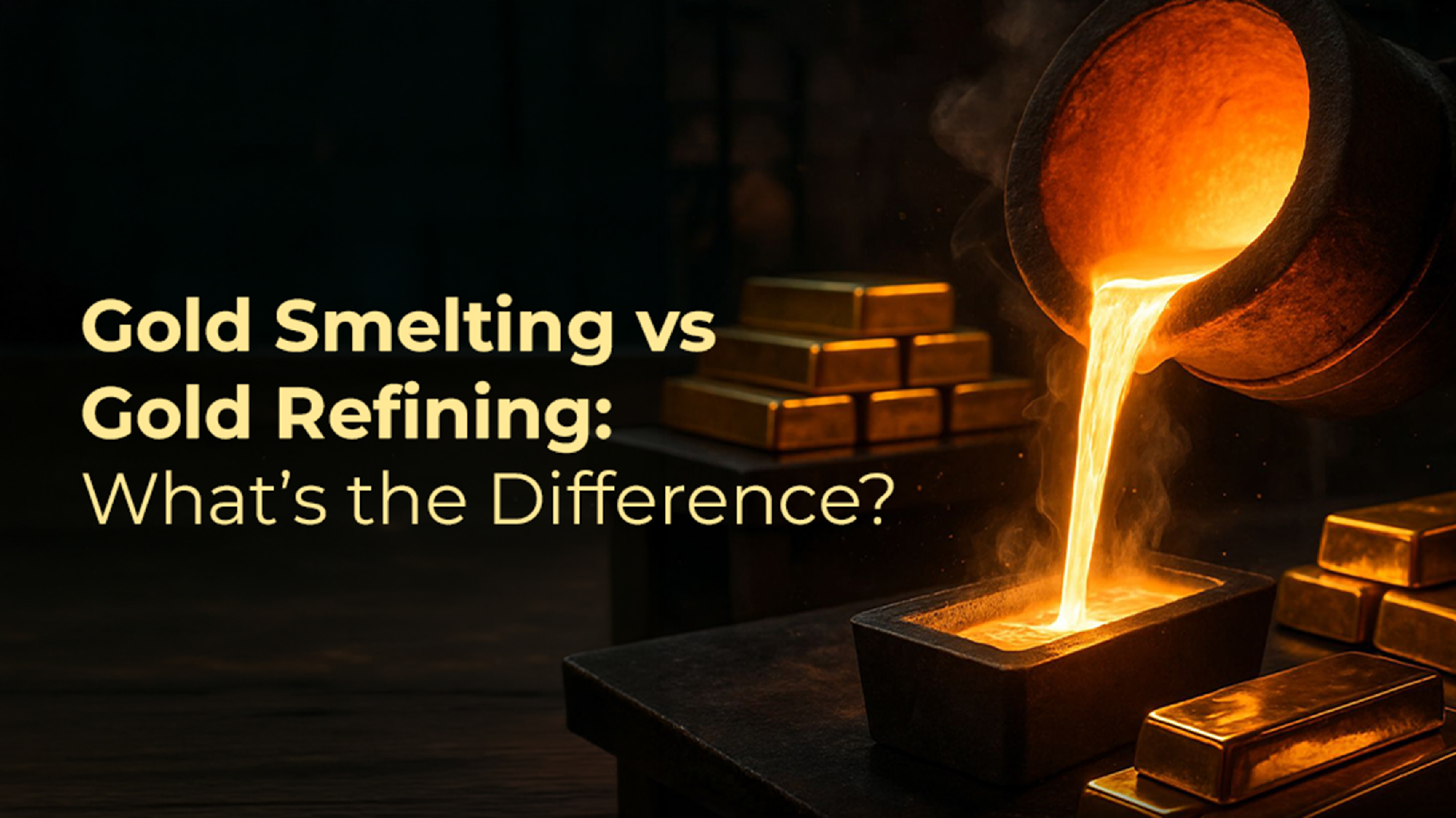
Gold Smelting vs Gold Refining
Gold has fascinated humanity for centuries, not just as a symbol of wealth, but also as a critical material in jewellery, investment, and technology. However, before gold reaches its final form, it undergoes complex processes. Two of the most important stages are gold smelting and gold refining.
Despite the fact that these terms are frequently used interchangeably, their purposes are vastly distinct.Understanding the difference is essential for investors, jewellers, and businesses dealing with precious metals.
What is Gold Smelting?Gold smelting is the initial extraction process where gold is separated from ore or scrap using high temperatures.
Key Characteristics of Smelting:Involves heating gold-bearing material in a furnace
Uses flux (like borax or sodium nitrate) to separate impurities
Produces molten gold that solidifies into bars or grains
Removes bulk impurities, but not all contaminants
During smelting, gold is melted and separated from surrounding materials, forming what is often called dore gold, a semi-pure form.
Typically, smelted gold has a purity range of 80% to 95%, meaning it still contains other metals like silver, copper, or lead.
In simple terms:
Smelting = Extracting gold from raw material
Gold refining is the purification process that takes smelted or raw gold and removes remaining impurities to achieve extremely high purity.
Key Characteristics of Refining:Uses chemical or electrochemical methods
Includes processes like Aqua Regia, Miller, and Wohlwill
Removes microscopic impurities and alloyed metals
Produces gold with 99.9% to 99.99% purity
Refining ensures the gold meets international standards required for:
Investment-grade bullion
High-end jewellery
Industrial and electronic applications
In simple terms:
Refining = Purifying gold to its highest quality
Smelting and refining are not competing processes—they are complementary stages.
Smelting extracts gold from raw material
Refining purifies it to meet market standards
In fact, most gold must go through both processes before it is ready for sale or use. As highlighted by industry practices, smelting alone does not produce investment-grade gold.
Why Refining is Essential After SmeltingEven after smelting, gold still contains:
Base metals
Chemical residues
Alloy elements
Refining removes these impurities to:
Increase value
Ensure quality certification
Meet global bullion standards
Leading refineries like Auriz use advanced technologies to achieve 999.9 purity, ensuring gold meets international benchmarks.
When Do You Need Smelting vs Refining?Choose Smelting When:You have raw gold ore or mixed scrap
You need to extract gold from bulk material
You are in the mining or recovery stage
You want high-purity gold for resale or investment
You are dealing with jewellery or recycled gold
You need certified bullion quality
Gold smelting and gold refining are both critical in the journey from raw material to valuable asset but they serve very different roles.
Smelting gets the gold out
Refining makes it valuable
If you’re dealing with gold in any capacity whether as a business, investor, or jeweller understanding this distinction helps you make better decisions and maximize value.
Choose Refining When:
You want high-purity gold for resale or investment
You are dealing with jewellery or recycled gold
You need certified bullion quality, often after utilizing gold smelting services in Dubai for initial extraction
Gold smelting and gold refining are both critical in the journey from raw material to valuable asset, but they serve very different roles. Businesses that rely on gold smelting services in Dubai often combine both processes to achieve the best results.
Smelting gets the gold out
Refining makes it valuable
If you’re dealing with gold in any capacity whether as a business, investor, or jeweller, understanding this distinction, along with the importance of professional gold smelting service in Dubai, helps you make better decisions and maximize value.
